Data centre managers and IT directors face many challenges protecting critical infrastructure. One often overlooked but serious risk comes from microscopic metal filaments known as zinc whiskers. These tiny conductive hairs grow on old electroplated floor tiles and can cause devastating hardware failures. Understanding how zinc whiskers form, why they are dangerous, and how to safely remove them is essential for maintaining uptime and protecting expensive IT assets.
If your facility in Leeds, Manchester, or Teesside relies on older raised access flooring, understanding this risk is not optional—it is essential for protecting your uptime. This is a critical issue for the UK's legacy infrastructure, particularly across the Northern Powerhouse. Many data facilities in Leeds, Manchester, and Teesside were fitted out over a decade ago using these electroplated tiles. If your facility dates back to this era, there is a high probability you have a dormant whisker colony growing beneath your raised floor right now, waiting to be disturbed.
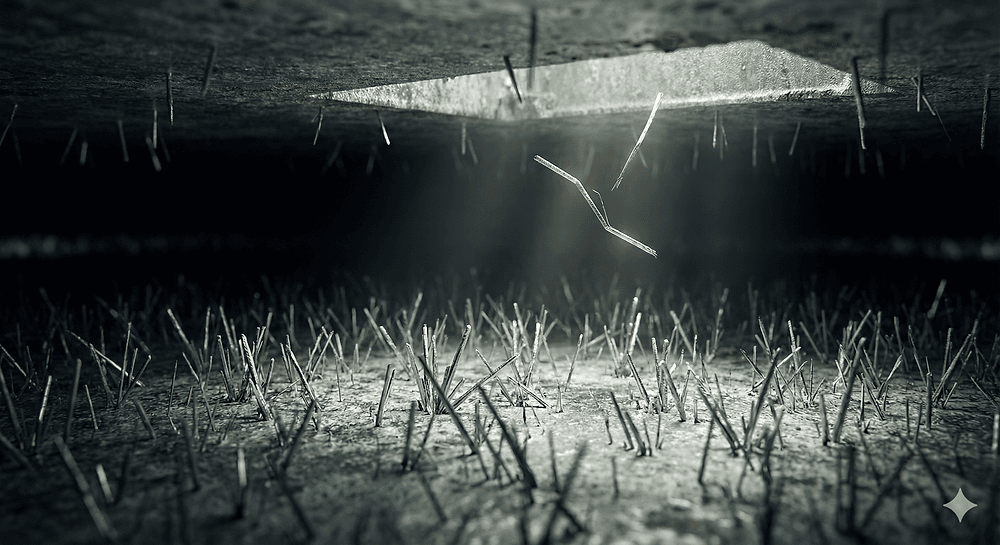
What Are Zinc Whiskers?
Zinc whiskers are thin, hair-like filaments of pure zinc that spontaneously grow from zinc electroplated surfaces. They typically appear on older raised floor tiles used in many legacy UK data centres. These whiskers measure just a few microns in diameter but can grow several millimetres long. They form due to internal stresses in the zinc plating caused by temperature changes, humidity, and mechanical strain.
While invisible to the naked eye, zinc whiskers are highly conductive and brittle. Over time, they break off from the floor surface and become airborne dust particles. This dust can then settle inside sensitive IT equipment, especially server power supplies and circuit boards.
Why Zinc Whiskers Are Dangerous for Data Centres
The real danger of zinc whiskers lies in their ability to cause electrical short circuits. When whiskers detach and float through the air, they can enter servers, switches, and other hardware. Once inside, they may bridge electrical contacts or circuit traces, causing:
Sudden hardware failures
Intermittent system crashes
Data corruption
Unexpected downtime
These failures are often difficult to diagnose because the whiskers are microscopic and invisible without specialised microscopy. The damage can lead to costly repairs, data loss, and service interruptions.
How Standard Cleaning Can Make the Problem Worse
Many data centres perform routine data centre cleaning using traditional janitorial methods. Unfortunately, scrubbing or sweeping electroplated floor tiles can dislodge zinc whiskers and launch them into the air. This increases airborne contamination and the risk of whiskers entering IT equipment.
Standard server room cleaning methods are not designed to contain or remove these microscopic hazards. Instead, they can spread whiskers throughout the data hall, worsening the problem. This is why many data centres unknowingly accelerate zinc whisker contamination during routine cleaning.
This is the 'Janitorial Trap.' A general cleaner sees a dirty floor and instinctively uses a rotary scrubber or stiff broom. This mechanical aggression is catastrophic for zinc tiles. It snaps the fragile filaments, turning a stationary risk into an airborne disaster. IsoGuard employs a 'Soft-Touch' protocol as the only safe way to clean these surfaces without triggering an outage.
Professional Identification and Removal of Zinc Whiskers
Addressing zinc whiskers requires specialised technical cleaning services tailored to this unique risk. The first step is microscopic identification. Unlike standard cleaners, we utilize High-Definition Portable Microscopy to inspect your tiles instantly on-site. We show you the images of the infestation, giving you visual proof of the risk without needing to send samples to an external lab.
Once confirmed, the safest removal method involves:
Soft-touch HEPA vacuum extraction under strict containment protocols
Avoiding abrasive scrubbing or sweeping that releases whiskers into the air
Using ISO 14644-1 compliant cleaning procedures to control airborne particles
Performing ISO Class 8 validation to verify cleanliness levels after treatment
These methods ensure zinc whiskers are safely removed without spreading contamination. Professional computer room cleaning teams trained in these protocols protect IT equipment and maintain cleanroom standards.
Best Practices for Managing Zinc Whiskers in Legacy Data Centres
Data centre managers should take proactive steps to minimise zinc whisker risks:
Identify areas with old electroplated floor tiles prone to whisker growth
Schedule regular inspections using microscopy to detect early signs
Use specialised IT equipment cleaning and data hall decontamination services certified to ISO 14644-1 standards
Train cleaning staff on the dangers of zinc whiskers and proper cleaning techniques
Consider replacing legacy floor tiles with modern alternatives that do not produce whiskers
Implement environmental controls to reduce temperature and humidity fluctuations that accelerate whisker growth
Following these steps helps protect critical infrastructure and reduces unexpected downtime caused by zinc whisker contamination.
Summary
Zinc whiskers represent a hidden but serious threat to legacy data centre hardware. These microscopic conductive filaments grow on old electroplated floor tiles and can cause short circuits when they break off and enter IT equipment. Standard janitorial cleaning often worsens the problem by dispersing whiskers into the air.
The solution lies in professional identification through microscopy and careful removal using soft-touch HEPA vacuum extraction under containment. Adhering to ISO 14644-1 cleaning and ISO Class 8 validation protocols ensures effective control of this invisible hazard.
Data centre managers and IT directors should prioritise zinc whisker risk assessments and engage specialised technical cleaning services to safeguard their infrastructure. Taking action now prevents costly hardware failures and keeps critical systems running smoothly.
Don't wait for a short circuit to tell you there is a problem. Contact IsoGuard today to book a PRO+ Service and let us inspect your tiles.